The Rise of Lo-Fi: Why the Most Human Content Is Becoming the Most Powerful Tool in B2B Marketing

.png)
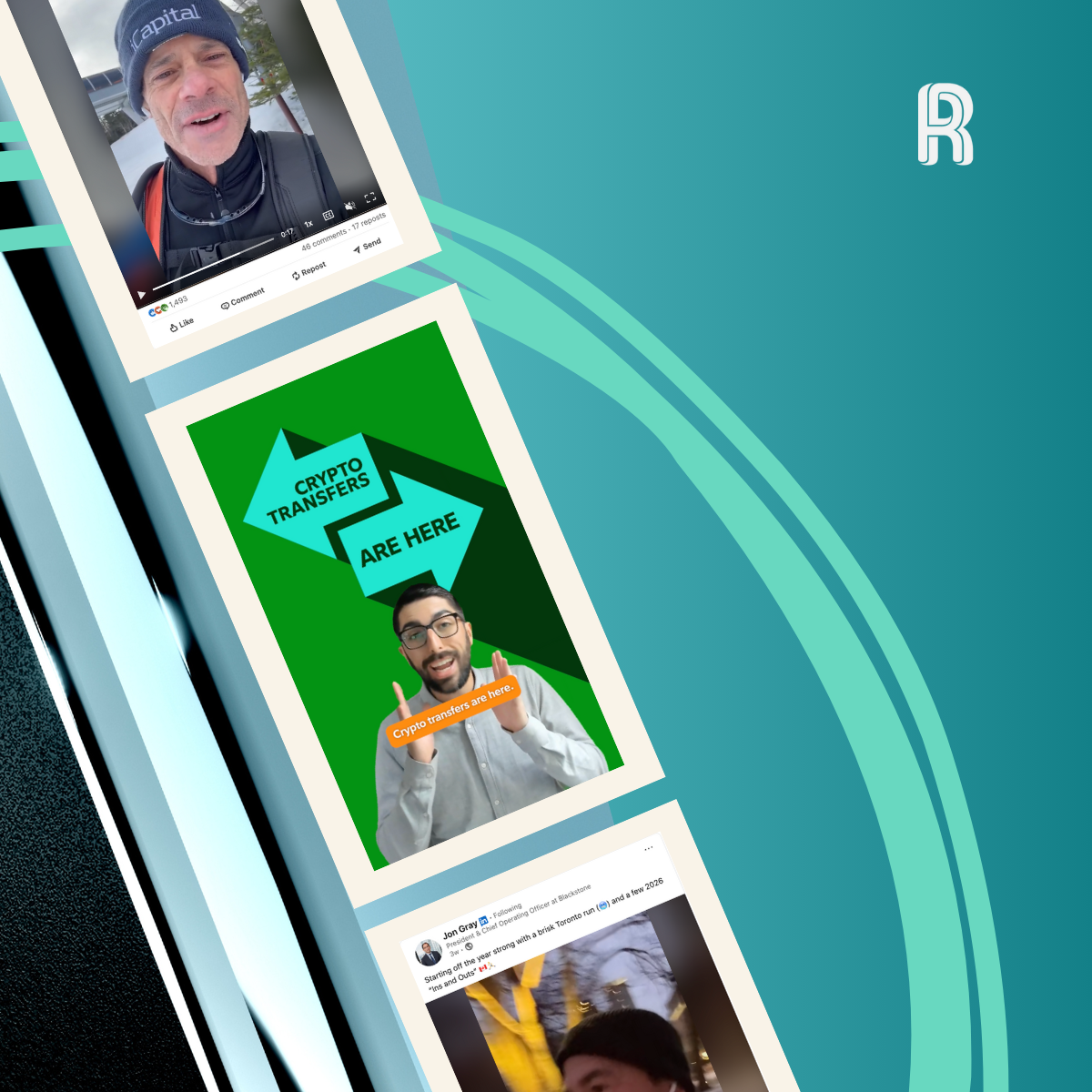
For the better part of a decade, B2B marketing has followed a golden rule: higher production value = higher credibility. Sleeker design implied sophistication. Polished videos, cinematic brand films, and meticulously scripted thought leadership became shorthand for “serious” brands—especially in financial services, where trust, stability, and scale are table stakes.
But something has shifted.
As we head into 2026, a growing number of B2B brands are leaning into content that looks imperfect, unscripted, and unmistakably human. We’re seeing more selfie videos, quick “in the moment” clips, screenshots of text serving as ads, and short vertical videos shot on a phone rather than a soundstage. What once would have been dismissed as unprofessional is now being recognized as something else entirely: authentic.
And it’s no coincidence this is happening at the same moment professionals are being flooded with AI-generated content that is technically correct and well-formatted, yet emotionally hollow. In the era of AI, lo-fi is winning because it looks and feels different. Humanity stands out.
How We Got Here: From Slick to So-So
Lo-fi didn’t come out of nowhere. To understand why lo-fi is gaining traction, it helps to look at the forces that made high-production content feel increasingly disconnected.
First came the over-optimization era
As digital marketing matured, content became optimized around templatized “best practices.” In many industries—financial services especially—brand expression narrowed to a safe middle ground. Confidence without boldness. Smarts without specificity. Approachability without personality.
Over time, this sameness has led to dull, forgettable content from brands that feel indistinguishable.
Then social rewired what “credible” looks like
TikTok, Reels, and Shorts don’t reward polish. They reward presence, clarity, and point of view. On these video platforms, you don’t need a studio to be trusted. You need to say something in your own voice, simply and directly.
And younger audiences increasingly look to social platforms for financial information, which has pushed firms to grapple with “creator culture” whether they like it or not. Charles Schwab’s commentary on “finfluencers,” and its own Modern Wealth Survey showing over ⅓ of Gen Zers turn to social media for investing advice, reflect how mainstream this has become.
And finally, the AI content flood
The final accelerant is generative AI. It has never been easier to produce content at scale. The result is a flood of competent, “clean” writing, but a growing sense that much of it is interchangeable. Professionals can feel it instantly even if they can’t pinpoint why.
When everything starts to sound the same, differentiation comes from proof of humanity, regardless of polish.
What Lo-Fi Actually Means in B2B
Lo-fi content is often misunderstood as low-effort, but it isn’t.
Lo-fi removes friction between thought and expression. It shortens the distance between “here’s what I think” and “here’s what I posted.” You don’t wait for the script. You don’t wait for the edit. You don’t wait for five rounds of feedback and a brand review. You show up.
In B2B, lo-fi often looks like a quick phone video after a meeting, an executive explaining something complex without a teleprompter, or a screenshot-led post that shares real observations without over-packaging. Sometimes it’s a short vertical clip with just enough editing to make it easy to follow.
The aesthetic varies, but the emotional signal stays the same. There is a real person behind this.
Lo-fi content feels like someone talking to you, not at you. Rand Fishkin has been doing this style of communication for years, long before it became a trend.
Why Lo-Fi Works
Lo-fi is rising for a few reasons, and most of them trace back to trust.
Trust is being rebuilt at the human level
In financial services, relationships have always mattered more than marketing wanted to admit. People don’t choose a firm because of the firm’s font choice. They choose a firm because they trust the people behind the decisions.
Lo-fi content helps people see those decision makers. It creates credibility through visibility. It shows real experts paying attention, thinking clearly, and explaining what matters in plain language.
Relevance beats refinement
High-production content has a timing problem. It takes time to make, approve, and publish. Markets move faster than that. Conversations move faster than that too.
Lo-fi content gives teams a way to respond while the moment still matters. A timely video filmed on a phone can outperform a beautifully produced asset that arrives weeks late.
Professionals want snackable content that still has substance
Short form does not mean shallow. It forces clarity.
A 60 to 120 second video forces someone to land the insight. It rewards the kind of thinking that can be explained quickly, without unnecessary wordiness. For time-starved professionals, that’s a win.
You can see this cadence in formats like Morgan Stanley’s Thoughts on the Market. It’s built for quick consumption and distributed across major platforms, including YouTube.
Who’s Doing It Well in Financial Services
Even in a category that loves polish, lo-fi is already showing up in meaningful ways.
BlackRock’s “Life at BlackRock” content offers a clear playbook. It’s short, casual, and personality-forward. It often feels like quick answers from real people rather than corporate storytelling. Many clips sit under 60 seconds and borrow directly from the visual language of Shorts and Reels. While it’s technically employer branding, the lesson travels well into B2B. Lightweight formats scale because they are repeatable.
Fidelity has also leaned into platform-native short video, especially on TikTok. It doesn’t treat the channel as a stunt. It treats it as a place where people come to learn in small, approachable increments. The signal is simple. The firm understands how people want to consume information now.
Blackstone has helped normalize lo-fi video at the executive level. President and COO Jon Gray posted his first selfie video to LinkedIn about a year ago and has leaned into the format since then. Many of his posts carry a behind-the-scenes energy and prioritize clarity over production. That matters because when a senior finance leader does this publicly, it makes the format feel safer for others to try.
Then there’s iCapital. In December, CEO Lawrence Calcano posted a lo-fi video from the slopes. It stood out precisely because it avoided the polished, year-end “holiday message” video that many brands default to. It looked to be the first video he’d ever published to LinkedIn, and the reason is probably practical: He could film it and post it without a full production cycle.
Other great examples from our client partners include Venn, whose in-house expert Chris Carrano has posted some informal videos to highlight specific research pieces. Navan has also done a great job incorporating staff into videos and sharing videos from leaders that help the brand appear casual and approachable.
This is one of lo-fi’s biggest advantages. It lowers the activation energy. More leaders participate when content feels doable.
What This Means for B2B Marketing Teams
For marketing teams, lo-fi forces a shift in role. The job becomes less about producing perfect assets and more about enabling real voices.
That includes building repeatable formats, helping subject-matter experts get comfortable on camera, and coaching clarity while staying compliant. Teams that do this well tend to prioritize simple, consistent habits over one-off hero moments.
It also forces a rethink of approvals and governance. Financial services has real constraints, and those constraints aren’t going away. Lo-fi can still work inside them, but only if the process stays lean. Guardrails that are clear and lightweight can help ensure lo-fi scales. The marketing team can help define safe topics, simplify disclosures, and carve out faster paths for recurring formats.
Measurement needs to evolve too. Lo-fi content does not always rack up huge reach, but it often produces better signals. You see more thoughtful comments, more DMs, more internal sharing, and more “can you send me that clip?” moments from sales and relationship teams. Those signals reflect trust, not just visibility.
Looking Ahead to 2026
In 2026, lo-fi will feel like the new baseline, no longer an emerging trend. Audiences will expect evidence of humanity alongside institutional strength. They’ll want to see the people behind the thinking, not just the thinking packaged into a PDF.
The winning firms won’t abandon polish. They’ll use it with intention. They’ll save high production for moments that truly require it.
The rest of the time, they’ll show up clearly and consistently. They’ll share perspective in a voice that sounds like a real person. And they’ll rebuild the one thing no amount of production value can manufacture: trust.